A Small Look Into Reality: Natasha’s Fight for a Second Chance
For families with chronically ill children, the questions never stop. Friends and strangers alike often ask: “What’s the scariest part about your daughter getting a transplant?”
The truth is, it isn’t just the surgery itself—though surgery is terrifying enough. The scariest part comes afterward, when the reality of recovery sets in.
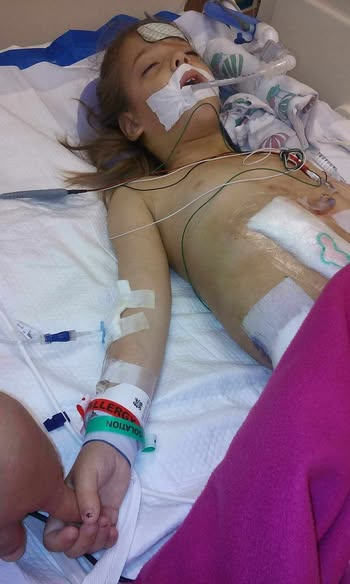
It’s when you see your daughter lying motionless in a hospital bed, her body connected to tubes and wires, her chest covered in fresh surgical wounds.
It’s when you realize that all you can do is stand there, helpless. You can’t hold her in your arms.
You can’t take away her pain, her fear, or her exhaustion. All you can do is hold her small, still fingers, whisper words of love, and pray—pray for healing, pray for strength, pray for a miracle.
Natasha’s First Miracle
Natasha, lovingly called Tasha, has been a fighter all her life. When she was just a little girl, her kidneys began to fail. Her family’s world turned upside down, filled with hospital stays, endless tests, and the terrifying wait for a transplant.
Then, at 8 years old, she received her first miracle: a kidney from a generous woman named Jodi Marie. That gift gave her not just years of life, but years of joy.
For eight precious years, Natasha thrived. Her family celebrated birthdays, milestones, and the everyday moments that so many take for granted. Every laugh, every step, every hug was a reminder of Jodi’s selfless gift.

A New Reality
But now, eight years later, Natasha faces the battle again. Her transplanted kidney has begun to fail, and the family is once more preparing for a transplant.
The fear they thought they had put behind them is suddenly real again. The procedures, the waiting, the uncertainty—all of it has returned. And this time, it is harder.
At 16, Natasha should be stepping into her teenage years with excitement. She should be playing sports, learning to drive, hanging out with friends, and making plans for the future. Instead, she is fighting just to make it through the day.

Life With a Failing Kidney
The toll on Natasha’s body is overwhelming. She endures frequent hospital stays, countless blood draws, and new medications that leave her weak and exhausted.
Walking across a room can feel like running a marathon. Her breath catches. Her legs tremble. Sometimes, she feels like she might pass out.
The pain in her kidney is relentless, though she hides it well. Natasha has become an expert at masking her suffering, smiling when she doesn’t feel like it, and pretending to be okay so others don’t worry. But her family sees the truth.
They see the weariness in her eyes, the heaviness in her body, the dreams put on hold.
Her parents ache for her. They hate that she feels she must hide her pain. They hate that she has been robbed of so many simple joys of being a teenager.

A Hard Pill to Swallow
It’s not easy watching your child miss out on milestones that others take for granted. While Natasha’s peers are at soccer practice, behind the wheel of a car, or laughing with friends at a school dance, she is in a hospital bed.
Her strength is inspiring, but the reality is heartbreaking. Life isn’t fair—and her parents feel the weight of that every day.
Still, Natasha doesn’t complain. She carries herself with quiet courage, even when her body fails her. She has a resilience that humbles everyone around her.

The Scariest Part of Transplant
When asked what’s the scariest part of a transplant, Natasha’s family answers honestly: “This. Watching her after surgery.”
The sight of her hooked up to machines, chest stitched from surgery, breathing tube in place—it’s unbearable. Parents want nothing more than to take the pain away, to trade places, to fix what’s broken. But they can’t.
All they can do is stand beside her, whisper prayers, and hope that God’s hand guides her through another miracle.
A Plea for a Donor
Now, Natasha’s future rests on finding another kidney. She needs a donor with blood type O-/O+. It’s a rare type, which makes the search even more urgent.
Her family is reaching out to everyone they can, asking for help. Even if someone can’t donate a kidney, donating blood is lifesaving too—especially for rare blood types. And sharing her story can help spread the word to someone out there who might be the match Natasha desperately needs.
This isn’t just about numbers and medical charts. It’s about giving a 16-year-old girl a chance to live the life she deserves. To go to school, to laugh with friends, to drive a car, to dream about her future. To be a teenager, not just a patient.
Holding On to Hope
Through every hospital stay, every needle, every sleepless night, Natasha’s family has held onto hope. They know how precious time is.
They pray that this second transplant will give Natasha the same gift her first one did: years of laughter, joy, and freedom.
A Call to Action
Natasha’s story is more than a medical case—it’s a story of resilience, love, and faith. It’s a story of a teenager who deserves the chance to live fully, without constant pain.
And it’s a story that needs all of us.
If you are O-/O+, consider becoming a kidney donor. If you can, donate blood. If nothing else, share her story. Every act of kindness, every prayer, every step taken on her behalf brings Natasha closer to the miracle she needs.
A Legacy of Gratitude
Natasha’s family never forgets the gift they were given eight years ago. They carry Jodi Marie’s name in their hearts with gratitude. That gift gave Natasha childhood memories she might never have had.
Now, they pray for another miracle, another chance, another gift of life.
Because Natasha’s story isn’t finished.
With the right donor, with enough love, and with the grace of God, this 16-year-old girl can step into the life she was meant to live—not defined by illness, but by joy, courage, and the chance to simply be herself. 💚