Max’s Journey – A Warrior at Ten
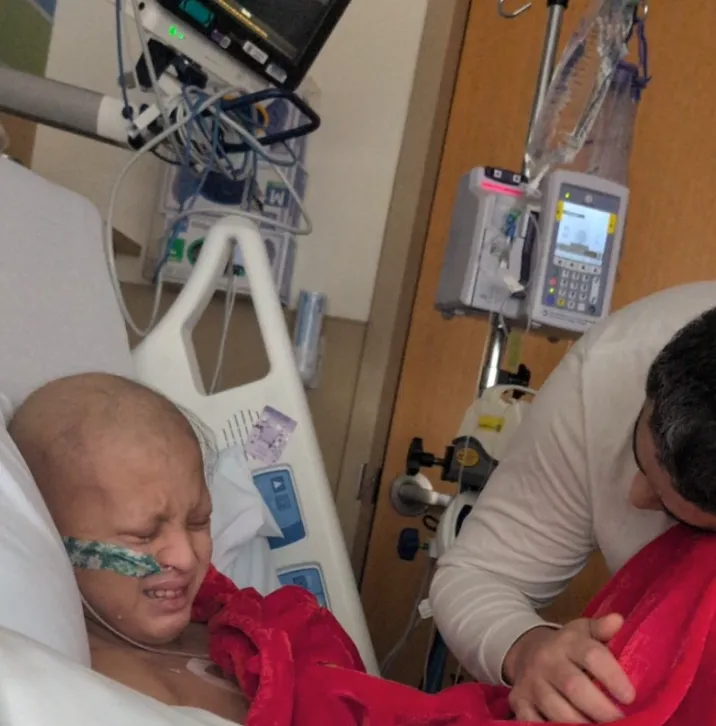
At the age of ten, when life should have been filled with carefree afternoons of building Lego castles, splashing in the pool, and dreaming about what he might become one day, Max’s world shifted in a way no child’s ever should. In November 2024, doctors gave his family a diagnosis that struck like lightning: stage 4 high-grade B-cell double-hit lymphoma.
It was a rare, aggressive cancer with no standard protocol for treatment—a one-in-eight-million chance. His mother described it with haunting words: “the lottery that we didn’t want to win.”
The Diagnosis
It all began with symptoms that seemed easy to brush off at first: fatigue, aches, small changes that could have been explained away by growth or seasonal illness. But as days passed, more alarming signs appeared, and soon doctors ran tests that revealed tumors spread throughout his small body.
Hearing the words “stage 4” crushed his parents. Stage 4 meant advanced. It meant widespread. It meant danger. Their hearts sank as they tried to understand this rare cancer—one so unusual in children that no clear treatment guidelines existed. They were thrust into a storm of uncertainty, forced to make decisions faster than they could fully process.
Max, meanwhile, sat in the middle of this whirlwind, absorbing more than his parents thought possible.

The Conversation
His parents made a difficult choice early on: to tell him the truth. Children, even at ten, are perceptive. They know when something is wrong. And Max deserved honesty.
One evening, with trembling voices and heavy hearts, they sat him down. His mom explained gently: “Max, the doctors found something called cancer in your body. It means you’ll need medicine that will make you sick for a while, but it’s to help fight the bad cells.”
Max looked at them with wide, steady eyes. After a moment, he nodded. His response was simple, powerful, and filled with courage beyond his years:
“I understand I have cancer, and I’m going to kick cancer’s butt.”
Those words became his rallying cry.

Entering a Research Study
Because his cancer was so rare, Max became one of the first children enrolled in a specialized research study. The study aimed to carve a path forward where none existed, to test combinations of treatments that might offer him—and future children like him—a fighting chance.
This was not just about Max’s survival. It was also about blazing a trail for others who might one day face the same diagnosis. His family clung to the hope that, by participating, they were not only fighting for their son but also helping build knowledge that could save lives in the future.

The Battle of Treatment
Treatment was grueling. Chemotherapy sessions stretched endlessly. Powerful drugs coursed through his veins, shrinking tumors but also leaving him weak and vulnerable. There were setbacks—days when he spiked dangerous fevers, when nausea stole his appetite, when exhaustion pinned him to his bed.
His immune system collapsed under the assault, leaving him fragile in ways no parent wants to see. The outside world became dangerous: a simple cold could spiral into something life-threatening. Masks, hand sanitizer, and isolation became his new normal.
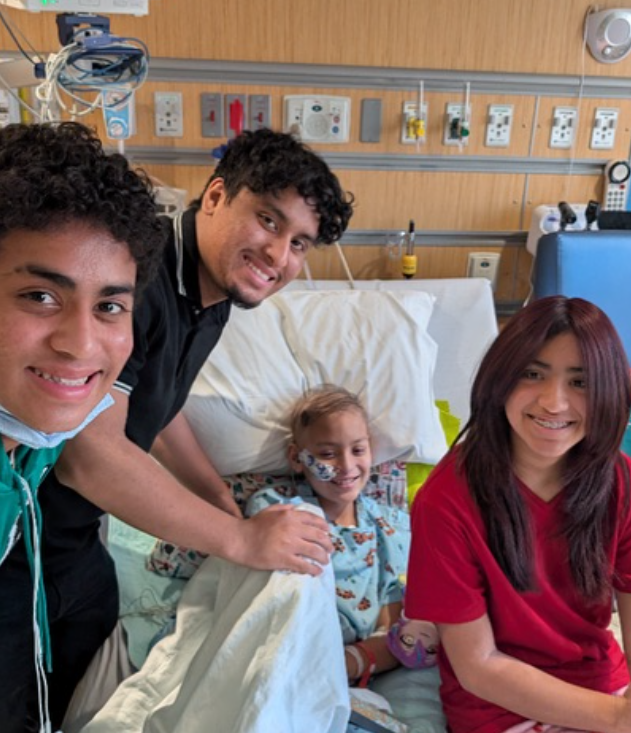
Yet through it all, Max’s spirit never wavered. He still built Lego towers from his hospital bed. He still smiled when nurses came in, cracking jokes even with IV lines in his arms. He still looked at his parents with a quiet assurance that he was going to keep fighting.

Setbacks and Courage
There were moments that terrified his family. Treatments didn’t always go as planned. Scans sometimes revealed progress but also stubborn tumors that refused to vanish completely. Each setback brought waves of fear, each delay another hurdle in an already exhausting marathon.
But every time, Max bounced back with determination. Even on days when he was too weak to walk, he whispered his mantra: “I’m going to kick cancer’s butt.” Those words carried him, and carried his parents, through the darkest hours.
April 2025 – Chemotherapy Completed
After months of relentless treatment, April 2025 brought a milestone they had dreamed about: Max completed chemotherapy.
The final session was emotional. Nurses who had become like family gathered to cheer him on. His parents held back tears as the last drops of medicine dripped from the IV into his veins. He rang the bell—a tradition for cancer patients marking the end of chemotherapy—and the sound echoed like a victory anthem.
Scans afterward brought cautious relief. Many of his tumors had vanished entirely. Others, though still present, had shrunk. It wasn’t a complete victory, not yet. But it was progress—a kind of miracle in itself.

Life After Treatment
Now, Max’s journey is far from over. Because of the aggressive nature of his cancer, doctors will continue to monitor him closely. Every three months, he will undergo scans to check the status of the remaining tumors, to ensure the cancer doesn’t return with new force. The uncertainty lingers, a shadow that his family cannot ignore.
But for now, they are focusing on the light.
Max is once again enjoying the things that make him a child. He spends hours building Lego creations, his imagination no longer confined to hospital walls. He swims, his laughter echoing across the water, a sound his parents cherish like treasure. He spends time with his family, soaking in moments that feel sweeter now, more sacred, because they know how fragile life can be.
His immune system is still compromised, so caution remains part of their routine. Crowded places are avoided, precautions are doubled. But within those limits, they are finding joy again.

A Family’s Perspective
For Max’s parents, every ordinary moment feels extraordinary. Watching him eat dinner at the table, hearing him laugh at a silly joke, seeing him dive into a pool—these are no longer small things. They are miracles.
His mother often reflects on how much this journey has changed them. “We didn’t want this lottery,” she says. “But if we had to walk through it, we’re grateful for every hand that held us, every doctor who fought for him, and every moment we get with Max.”

The Power of Research
Max’s story is also a story of research and hope. Without the clinical trial he joined, there would have been no roadmap for his treatment. His family believes strongly that more children deserve access to these breakthroughs—that research is the key to turning fear into hope.
They now advocate for funding, encouraging others to support childhood cancer research. Because somewhere, another child like Max will one day need a path forward.

A Warrior’s Spirit
Max’s journey is not defined by cancer. It is defined by courage. By the strength of a boy who, at ten years old, faced a diagnosis meant to crush spirits and instead responded with fire.
He is not just a patient. He is a warrior. He is a reminder that resilience can come from the smallest of bodies, that hope can live even in the darkest storms, and that love—his family’s love, his community’s love—can carry a child through the unthinkable.
Epilogue – Looking Ahead
No one knows what the future will hold. The road ahead is filled with scans, precautions, and lingering questions. But Max and his family walk it with cautious optimism.
They are choosing to celebrate life—not just the big milestones, but the tiny joys. They are choosing faith over fear, gratitude over despair.
And most of all, they are choosing to believe in Max.
Because when a ten-year-old looks cancer in the eye and says, “I’m going to kick your butt,” you believe him.