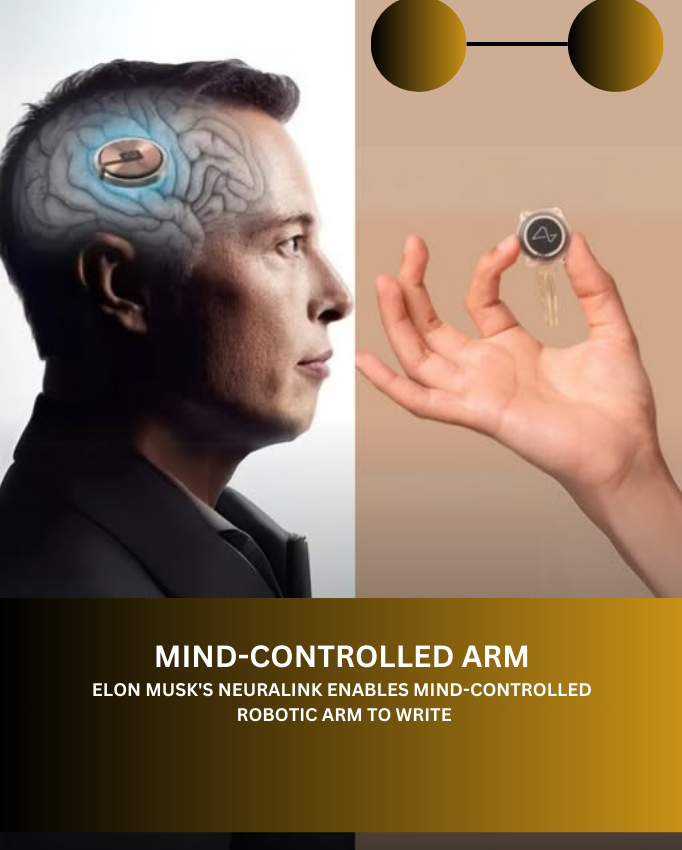
In a groundbreaking demonstration of technology and human-machine interaction, Neuralink, the neurotechnology company co-founded by Elon Musk, has revealed a new video showcasing a patient using its brain chip to control a robotic arm. The footage, which was unveiled at a highly anticipated event, marks a major milestone in the field of assistive robotics and could have profound implications for individuals with mobility impairments.
A Leap Toward Restoring Mobility
The video features a patient, who had previously been unable to move their arm due to a severe spinal cord injury, demonstrating the remarkable capabilities of Neuralink’s brain-machine interface (BMI) technology. With the assistance of the chip implanted in their brain, the patient is able to control a robotic arm with precise movements, such as picking up a glass of water, a task that had been impossible before.
Neuralink’s device functions by interpreting neural signals from the brain and translating them into digital commands that control external devices. The company’s latest demonstration illustrates how this technology could eventually enable paralyzed individuals to regain some degree of independence, giving them the ability to perform everyday activities that many take for granted.
How Neuralink’s Brain Chip Works
Neuralink’s brain chip is designed to be implanted into the brain, where it interacts with neurons and reads the electrical signals generated by brain activity. These signals are then decoded by sophisticated algorithms and used to control robotic limbs, computer interfaces, and potentially even other forms of assistive technology.
The company has been testing its chips on animal models, and this recent video marks a significant step forward in human trials. Neuralink’s technology is designed to be minimally invasive, with the chip embedded in the brain through a robotic surgeon that performs the procedure with high precision. In the demonstration, the patient’s brain was shown to send signals to the robotic arm in real-time, demonstrating an impressive level of coordination between the brain and the machine.
A Potential Game-Changer for Assistive Technology
This achievement is a monumental step in the development of assistive robotics. For individuals who have suffered from paralysis or loss of motor function due to spinal cord injuries, strokes, or neurodegenerative diseases, technologies like Neuralink’s could offer new hope. The ability to control robotic limbs directly with their thoughts could significantly improve the quality of life for those affected, restoring a level of autonomy that many thought was lost forever.
Moreover, Neuralink’s breakthrough could also pave the way for future applications in fields such as prosthetics, where the fusion of the human brain and robotic devices could lead to highly functional, responsive artificial limbs. The potential for this technology to evolve beyond the initial stages is immense, with experts suggesting that in the long term, we could see even more sophisticated interfaces that allow patients to control a wide range of devices, from exoskeletons to fully automated environments.
Challenges and the Road Ahead
While this demonstration is a huge leap forward, there are still numerous challenges to overcome before such technology becomes widely accessible. For one, the safety and longevity of Neuralink’s brain chip need to be fully tested and proven in long-term human trials. Furthermore, the complexity of decoding brain signals with perfect accuracy, especially in real-world environments, is an ongoing challenge.
Ethical considerations surrounding neural implants and privacy concerns also remain hotly debated. Questions about data security, the potential for misuse, and the long-term effects of brain chips on human cognition must be addressed as the technology continues to develop.
Nevertheless, Neuralink’s recent achievement demonstrates that the dream of merging human brains with advanced technology is moving closer to reality. Elon Musk has consistently stated that his vision for Neuralink is to help solve major neurological issues, and this latest breakthrough is a strong indication that the company is on the right track.
Looking to the Future
As Neuralink continues its research and development, the potential for its technology to revolutionize healthcare, robotics, and human-computer interaction is immense. If successful, this brain-machine interface could drastically improve the lives of millions of people who suffer from mobility impairments or brain-related disorders.
The demonstration of a patient controlling a robotic arm is only the beginning, and the possibilities for what comes next are endless. From restoring lost functionality to providing enhanced capabilities, Neuralink’s brain chip could represent the future of medical technology, assistive devices, and perhaps even human evolution itself.
With Elon Musk and his team at the helm, the world eagerly awaits the next chapter in the story of Neuralink, as it pushes the boundaries of what is possible with brain-computer interfaces and robotics.