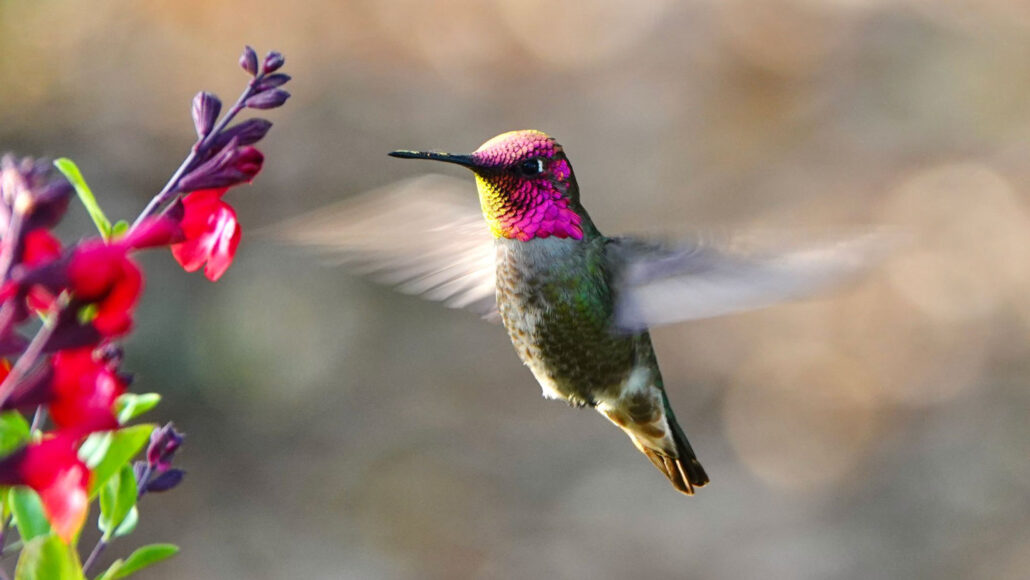
In the realm of avian wonders, the Anna’s hummingbird (Calypte anna) stands as a captivating spectacle, enchanting bird enthusiasts worldwide with its stunning hues and impressive feats of aerial agility. This diminutive creature, native to the western coasts of North America, has truly earned its place as one of nature’s most remarkable aviators.
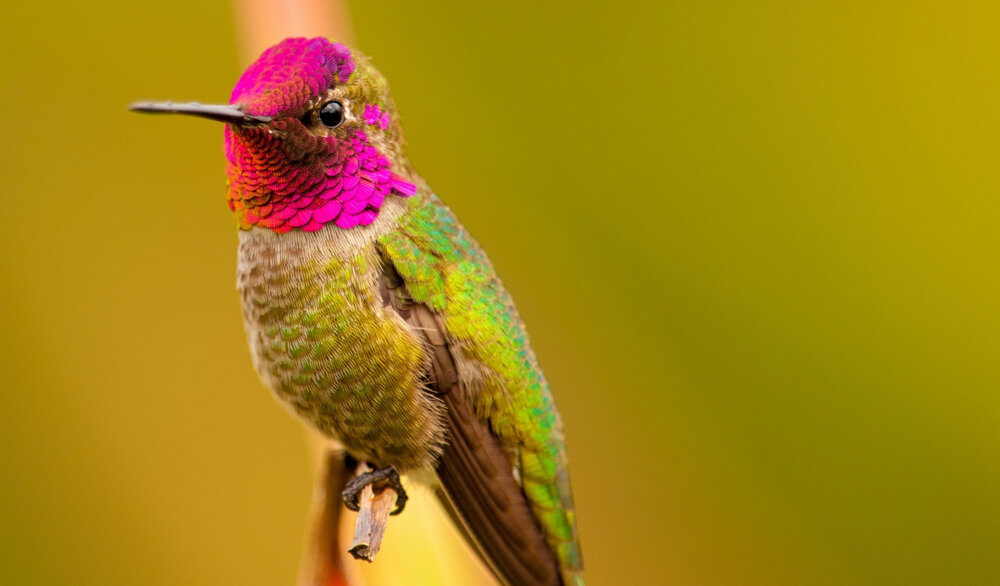
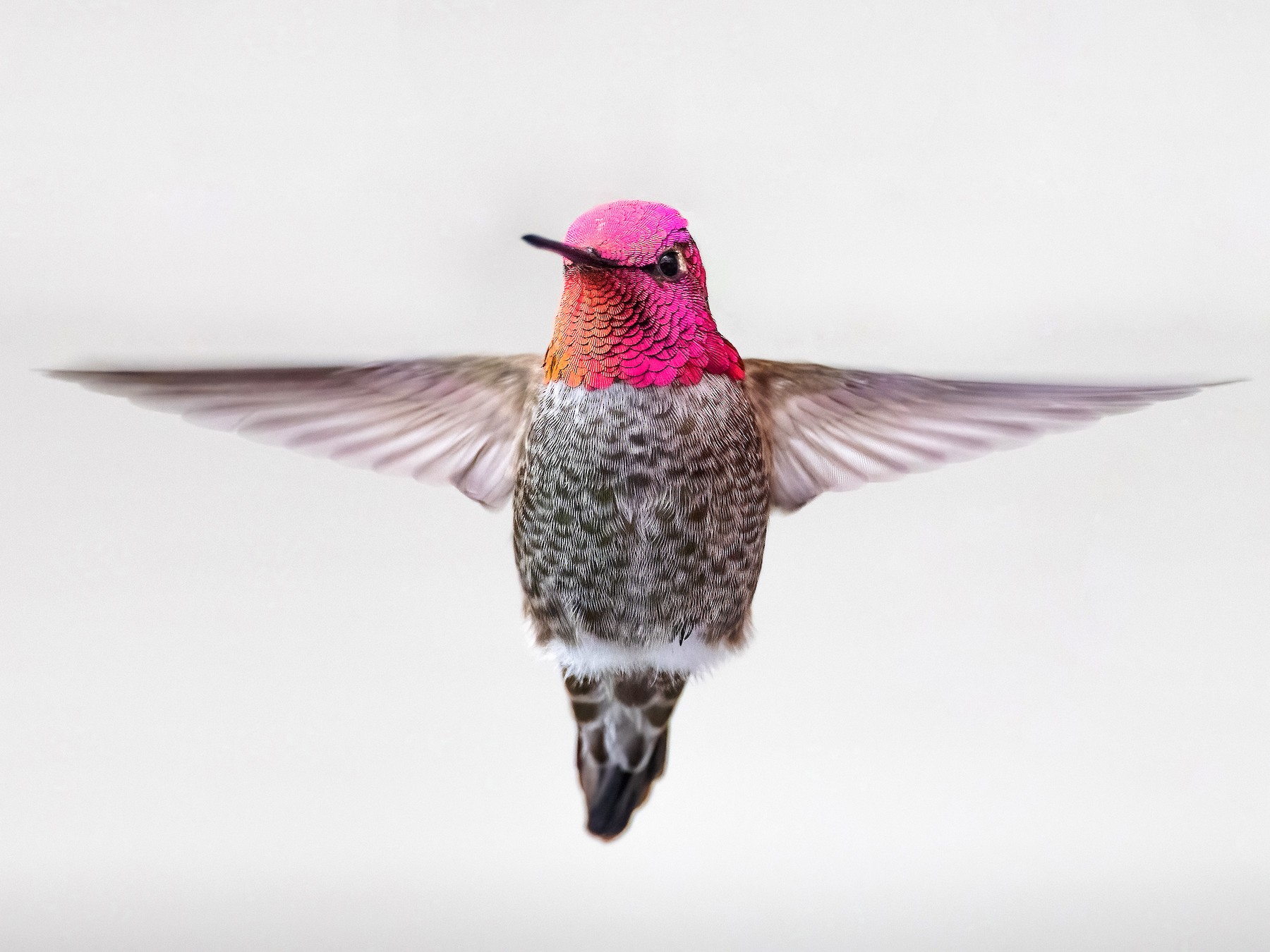
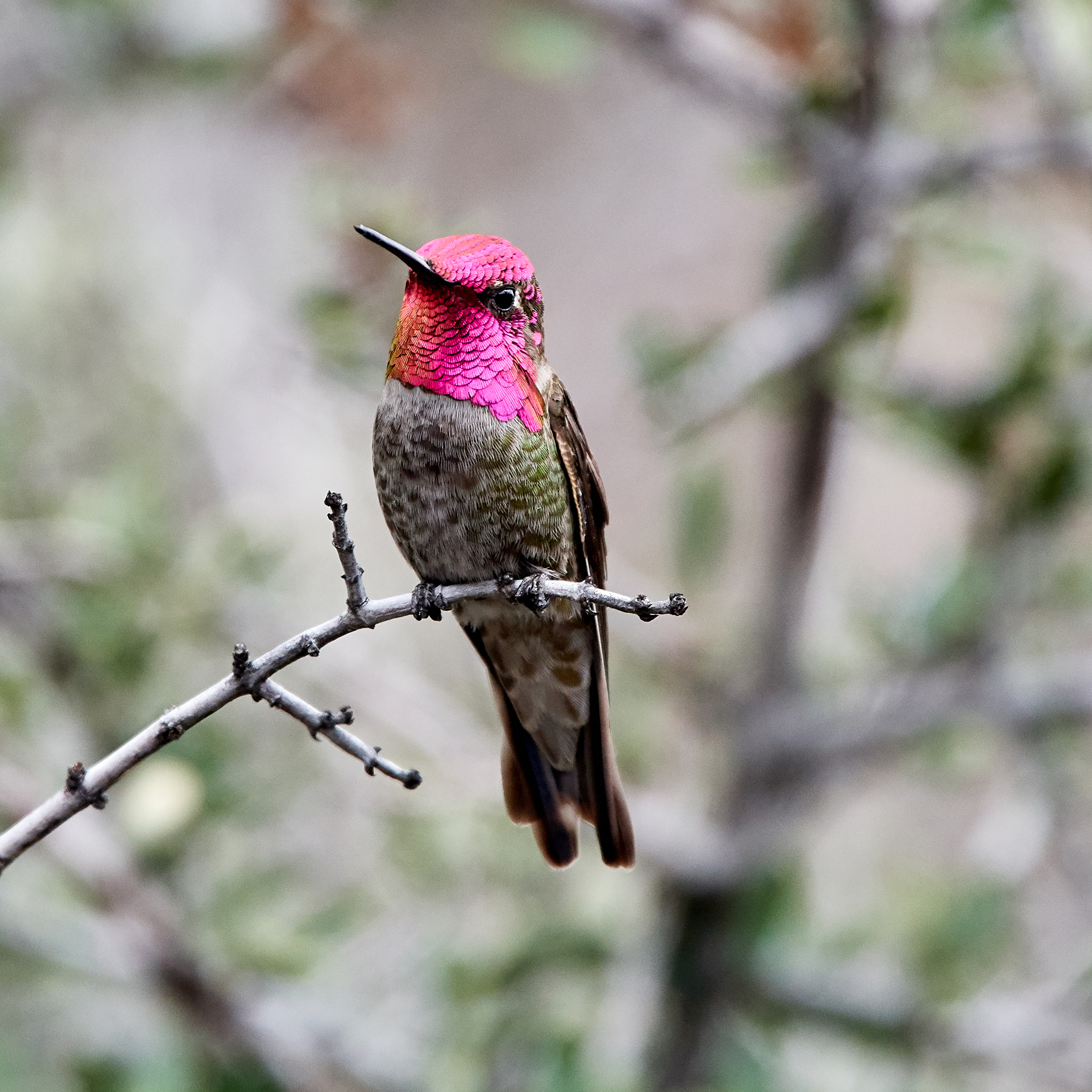
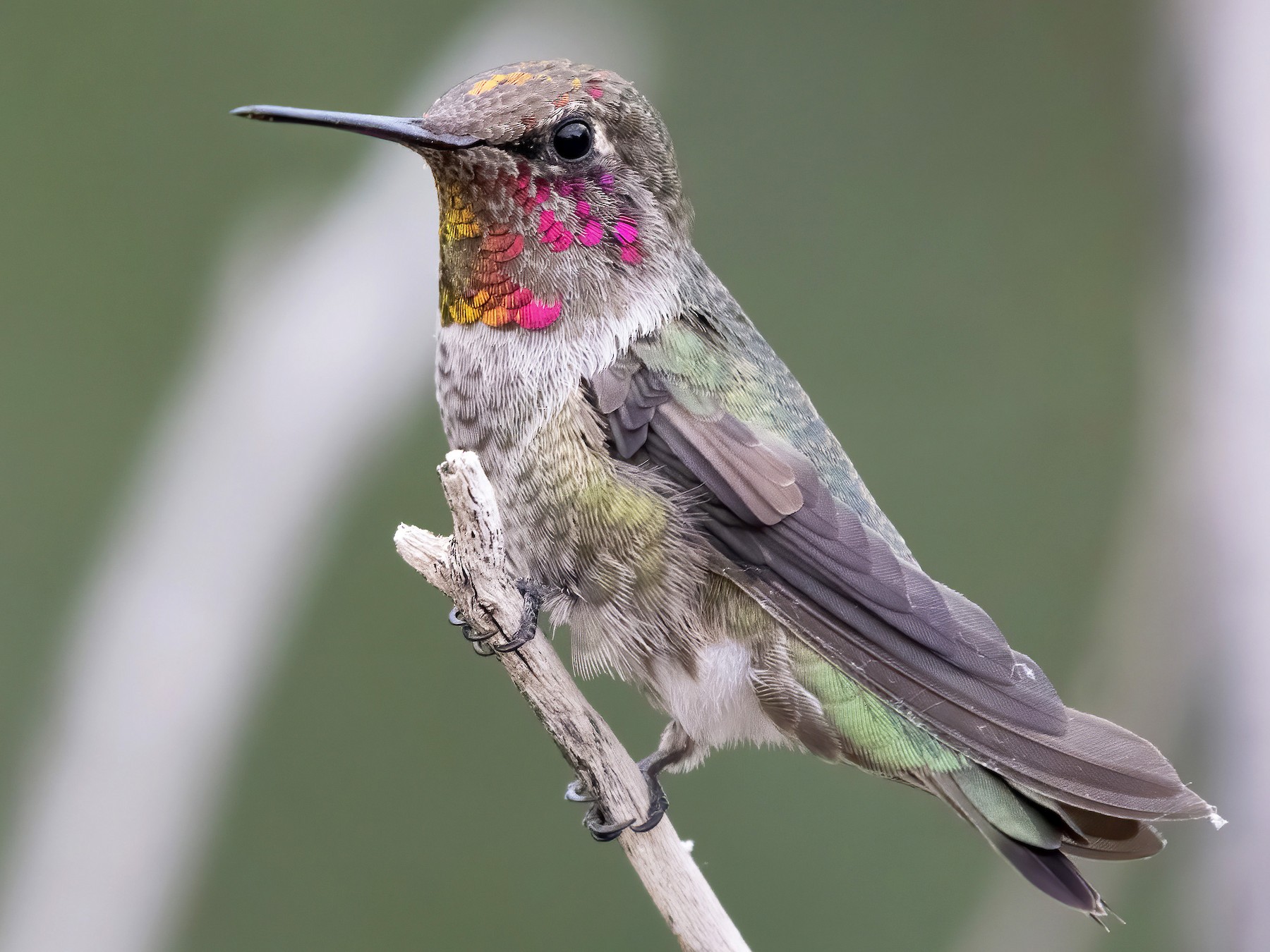
The Anna’s hummingbird has mastered the art of flight, boasting an array of breathtaking maneuvers that defy the norms of avian locomotion. With a compact body measuring a mere 3.9 inches (10 cm) in length, it commands attention with its iridescent plumage, a dynamic interplay of green and magenta that glisten like jewels in the sunlight, creating a mesmerizing visual spectacle for fortunate observers.

This tiny marvel of nature exhibits an unparalleled repertoire of mid-air acrobatics. Hovering effortlessly in place, flying backward with finesse, and executing gravity-defying mid-air dives are all within its repertoire. The Anna’s hummingbird’s remarkable flight abilities are a testament to the intricate adaptations that enable it to navigate the skies with such grace and precision.
The Range of the Anna’s Hummingbird
Stretching along the western coastal expanse of North America, from the southern reaches of Alaska to Mexico’s Baja California, the Anna’s hummingbird has carved out its territory. Its remarkable adaptability allows it to thrive even in human-altered landscapes, often gracing gardens, parks, and urban settings where flowers and feeders offer an abundant supply of nectar.
Nectar: Life’s Sustenance
Nectar is the lifeblood of the Anna’s hummingbird. With its specialized slender bill, it deftly extracts nourishment from flowers, consuming a staggering amount—up to half its body weight—in nectar daily. Yet, these avian marvels are not limited to a single dietary source. Insects caught in mid-flight also supplement their diet, showcasing their versatility as opportunistic hunters.
Intricate Courtship and Captivating Sounds
The Anna’s hummingbird’s courtship rituals are nothing short of extraordinary. Males engage in dramatic aerial displays, ascending to great heights before swiftly diving, their rapidly beating wings producing a distinctive buzzing sound. These mesmerizing performances serve a dual purpose: to impress potential mates with their prowess and to ward off competing males. Competitive aerial battles are not uncommon as they strive to secure both territory and companionship.