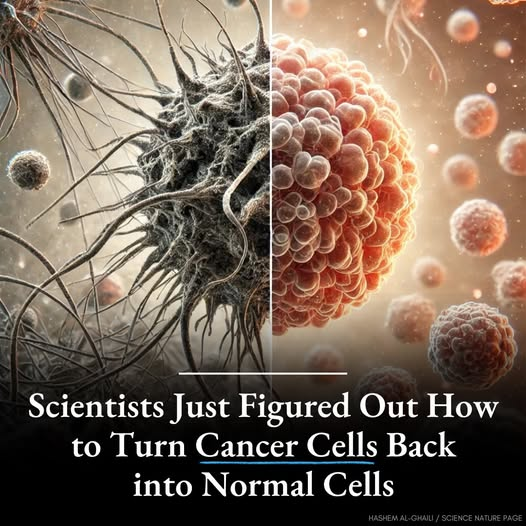
In a groundbreaking advancement, researchers at the Korea Advanced Institute of Science and Technology (KAIST) have discovered a revolutionary way to reverse cancer cells into healthy cells without destroying the surrounding tissue. This novel approach targets specific “master regulators” in the gene network of colon cancer cells, offering a potentially transformative shift in cancer treatment.
Traditionally, cancer therapies such as chemotherapy and radiation work by attacking and destroying cancer cells. However, these treatments also harm healthy cells, leading to significant side effects that make recovery challenging for patients. The new method, developed by Professor Kwang-Hyun Cho and his team, bypasses this issue by focusing on “reprogramming” the cancer cells themselves, transforming them back into normal, non-cancerous cells without causing damage to healthy surrounding tissue.
The key to this innovative treatment lies in the suppression of three master regulators—MYB, HDAC2, and FOXA2—critical components in the gene network of colon cancer cells. By manipulating these regulators, the researchers were able to initiate a process that reverted the cancerous cells back to their normal state, effectively halting their tumor-forming capabilities. This cutting-edge technique not only targets the root cause of the cancerous state but also eliminates the need for conventional therapies that damage healthy cells.
The effectiveness of this breakthrough was demonstrated through a series of sophisticated digital modeling, molecular experiments, and testing on mice. The results were nothing short of impressive, with the cancer cells reverting to a normal-like state, offering promising evidence that this approach could work for human patients as well. This new form of treatment, termed “reversible cancer therapy,” represents a paradigm shift in how cancer may be treated in the future.
What makes this discovery even more exciting is its potential to extend beyond colon cancer. In their ongoing research, the KAIST team has begun exploring the application of this model to brain cells in mice, with the goal of identifying master regulators that could help target and reverse brain cancer. By opening the door to treating multiple forms of cancer, this breakthrough could pave the way for more effective, targeted treatments for a variety of cancers that are currently difficult to treat.
Professor Kwang-Hyun Cho, the lead researcher on this project, shared his optimism about the research’s impact: “This research introduces the novel concept of reversible cancer therapy. It offers a new approach to cancer treatment that avoids the destructive side effects of traditional therapies, providing a more precise and less harmful alternative.”
If this technique proves successful in clinical trials and becomes widely adopted, it could revolutionize the way cancer is treated. Instead of relying on methods that indiscriminately destroy cells, this targeted approach could offer a more refined treatment option, providing hope for millions of cancer patients around the world. The KAIST team’s breakthrough signals an exciting new chapter in cancer research, with the potential to drastically change the landscape of cancer care.
#CancerBreakthrough #ReversibleCancerTherapy #KAIST #ColonCancer #CancerResearch #InnovativeTreatment #HealthScience #MedicalRevolution