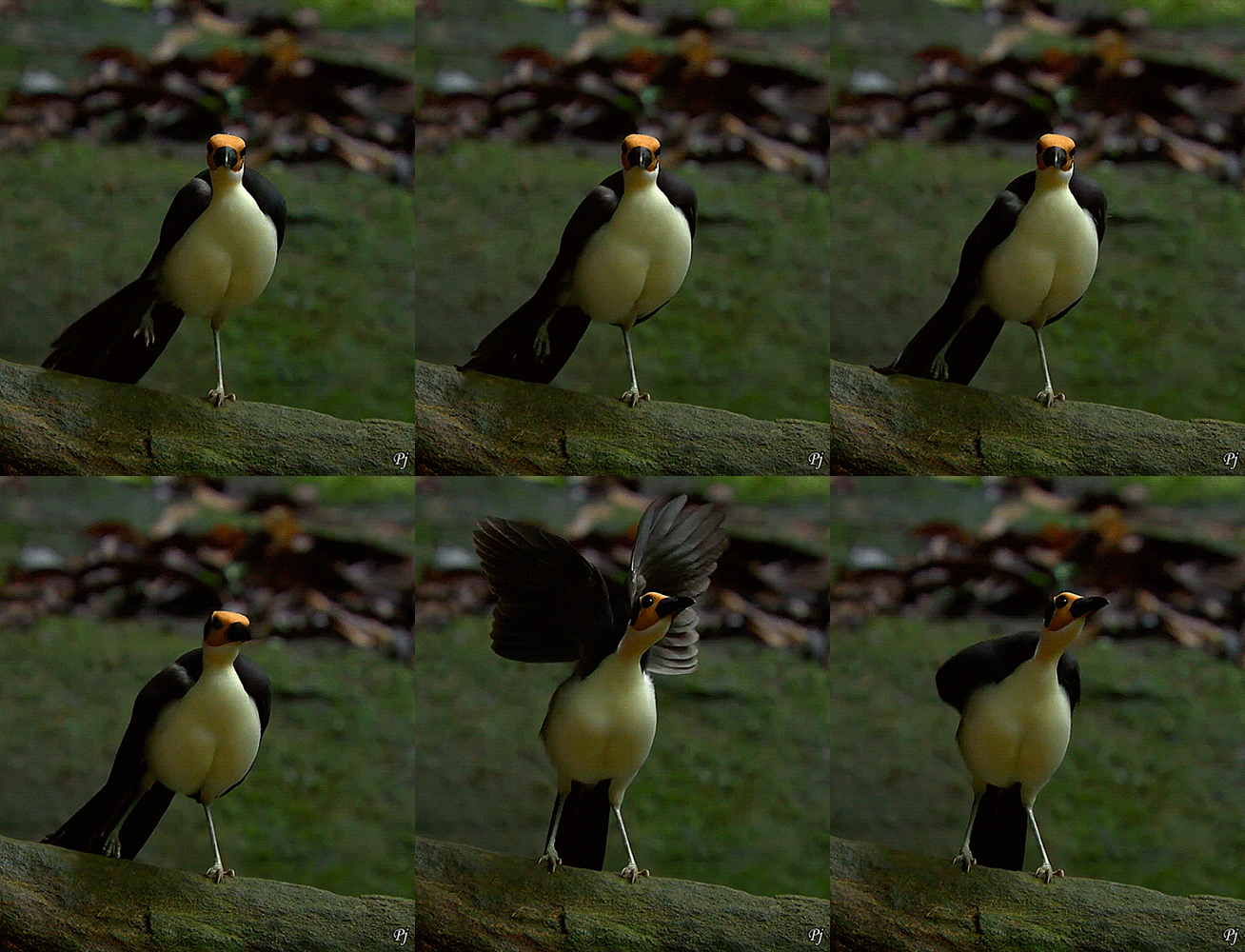
In the heart of West Africa’s dense rainforests, an elusive and enigmatic bird captures the fascination of ornithologists and bird enthusiasts alike—the Yellow-headed Picathartes, also known as the White-necked Rockfowl. With its striking yellow head, stark white neck, and dark plumage, this bird is a visual marvel, but its true allure lies in its mysterious habits and rare sightings.
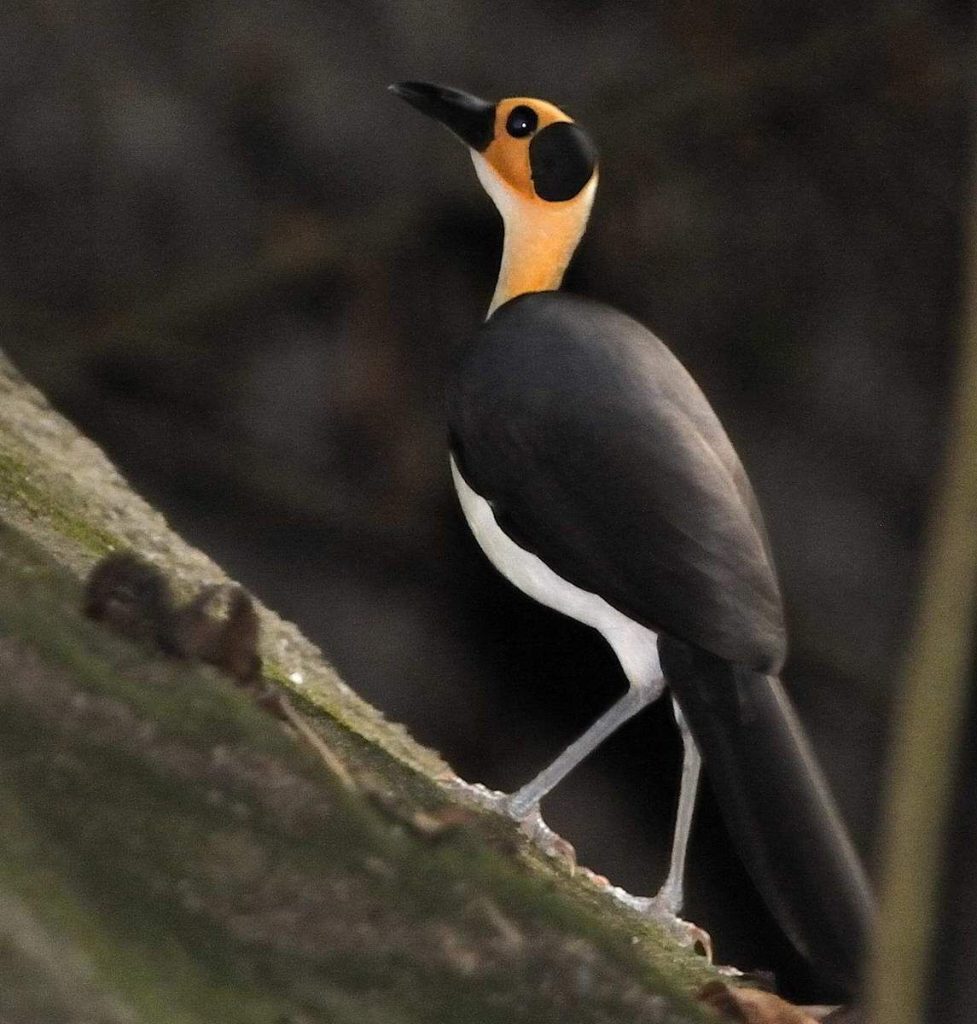
The Yellow-headed Picathartes is a master of stealth, often eluding even the most determined bird watchers. It thrives in the rocky outcrops and hidden crevices of the forest, making its nest from mud and leaves in caves or under overhangs. These unique nesting sites protect its eggs from predators and provide a cool, shaded environment for its young.
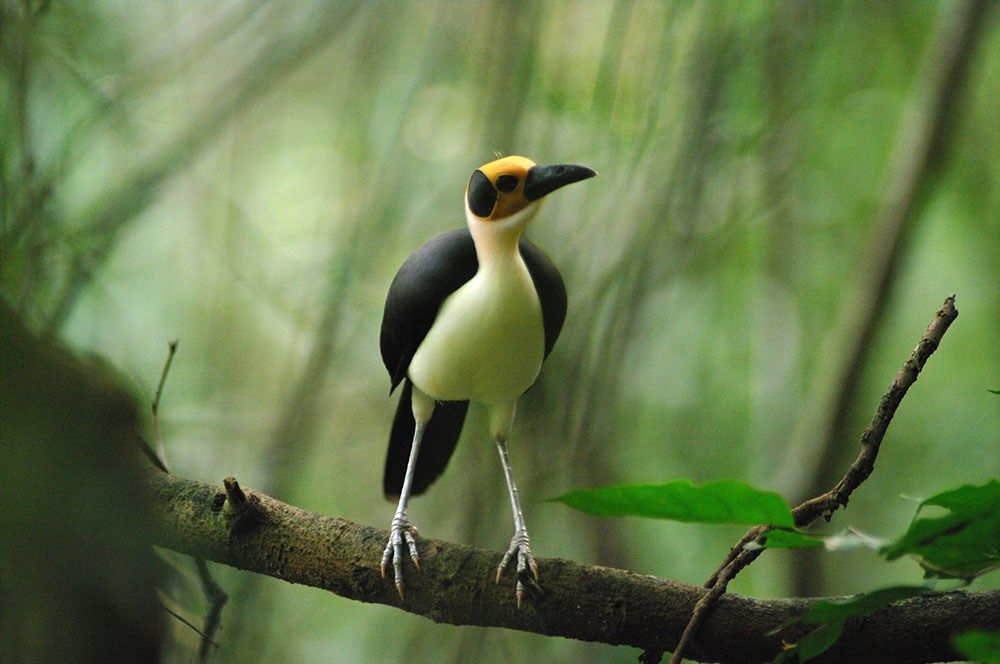
Despite its elusive nature, recent studies have shed light on the intriguing social behaviors of this bird. Picathartes are known to forage in small groups, their movements swift and coordinated as they hunt for insects, small amphibians, and other invertebrates. Their long, strong legs and sharp beaks are perfectly adapted for navigating the rugged terrain and capturing prey.
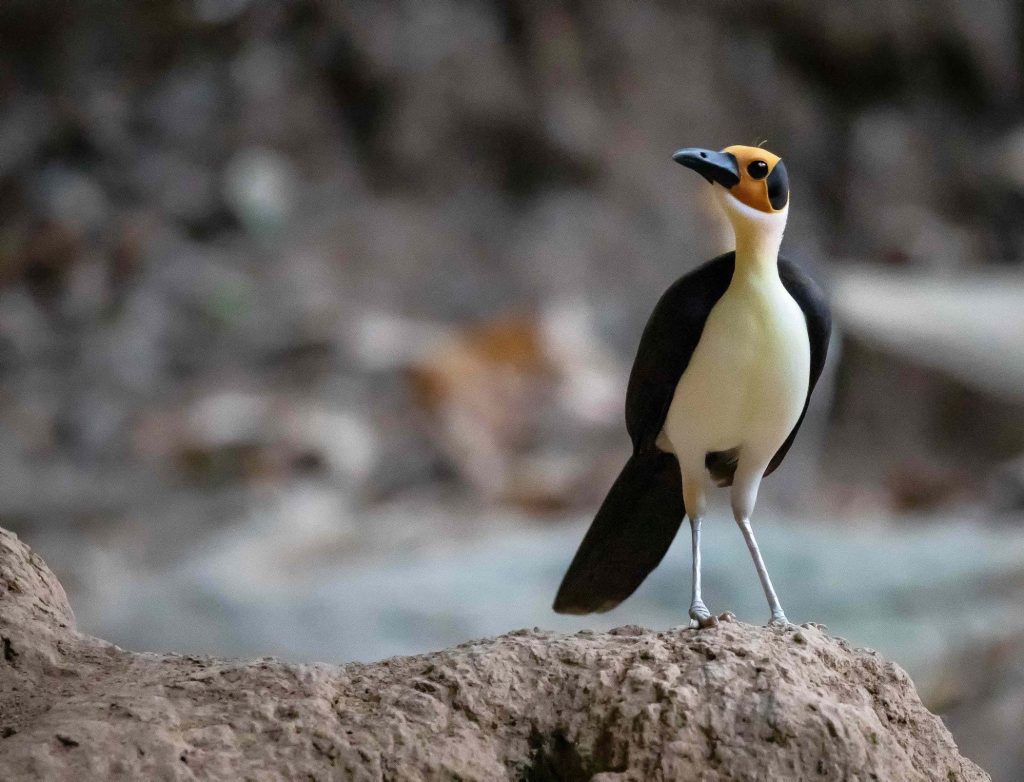
Conservationists are deeply invested in the fate of the Yellow-headed Picathartes. Habitat destruction poses a significant threat to their population, as deforestation and human encroachment reduce the availability of suitable nesting sites. Efforts are underway to protect the remaining forests and raise awareness about the importance of preserving these habitats.
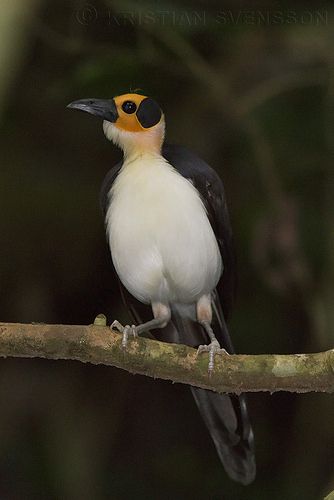
The mystique of the Yellow-headed Picathartes continues to captivate those fortunate enough to catch a glimpse of it. Each sighting is a reminder of the incredible biodiversity hidden within our planet’s forests and the ongoing efforts needed to protect these rare and beautiful creatures. As we uncover more about the secrets of the White-necked Rockfowl, we deepen our appreciation for the intricate web of life that sustains our natural world.
