
Flamingos are one of the most recognizable and beloved birds in the world, famous for their striking pink plumage and graceful stature. Belonging to the family Phoenicopteridae, there are six species of flamingos found across the Americas, Africa, Europe, and Asia.

Physical Characteristics
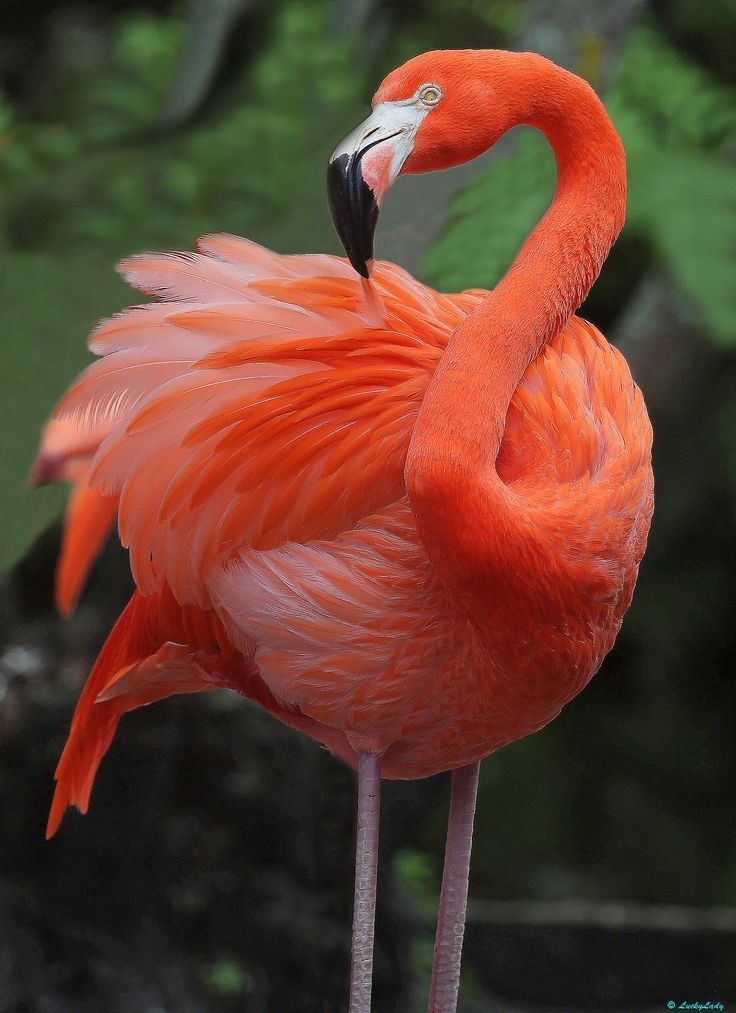
Flamingos are large birds with long legs, a long, flexible neck, and a unique downward-bending bill. Their vibrant pink color, which can range from pale pink to bright red, comes from carotenoid pigments in their diet, primarily obtained from algae and crustaceans. The flamingo’s bill is specially adapted to filter feeding, allowing them to sift through mud and water to capture food.

Habitat and Range
Flamingos inhabit shallow lakes, lagoons, mangrove swamps, and tidal flats. They are found in both tropical and subtropical regions around the world. The different species are distributed as follows:
- Greater Flamingo (Phoenicopterus roseus): Found in parts of Africa, southern Europe, and South Asia.
- Lesser Flamingo (Phoeniconaias minor): Predominantly found in sub-Saharan Africa and parts of India.
- Chilean Flamingo (Phoenicopterus chilensis): Inhabits temperate South America.
- Andean Flamingo (Phoenicoparrus andinus): Native to the high Andes of Peru, Chile, Bolivia, and Argentina.
- James’s Flamingo (Phoenicoparrus jamesi): Also known as the Puna Flamingo, found in the high Andes.
- American Flamingo (Phoenicopterus ruber): Found in the Caribbean, the Galápagos Islands, and parts of coastal South America.
Diet and Feeding Behavior
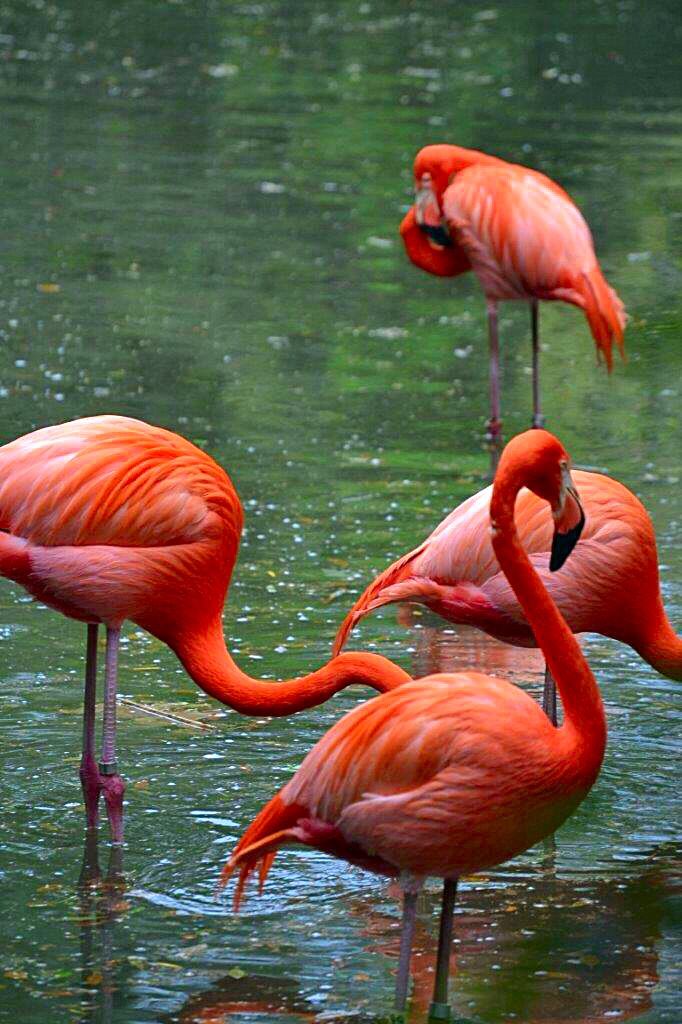
Flamingos are filter feeders, using their specially adapted bills to feed on small organisms such as algae, diatoms, crustaceans, and aquatic invertebrates. They often feed with their heads upside down in the water, sweeping their bills back and forth to filter food from the water using comb-like structures called lamellae.

Breeding and Nesting
Flamingos are social birds, often living in large colonies that can number in the thousands. These colonies provide protection from predators and increased efficiency in locating food sources. During the breeding season, flamingos engage in elaborate group courtship displays involving synchronized marching and head-flagging.
They build their nests as mud mounds in shallow water, where the female lays a single egg. Both parents share the responsibility of incubating the egg, which takes about 27-31 days to hatch. The chicks are born with gray or white down feathers and straight bills, which gradually curve as they grow and develop.

Conservation Status
The conservation status of flamingos varies by species. While the Greater and American Flamingos are classified as Least Concern by the IUCN, the Andean and James’s Flamingos are considered Near Threatened due to habitat loss and environmental changes. Conservation efforts focus on protecting wetland habitats, regulating water quality, and mitigating human disturbances to ensure the survival of these iconic birds.

Interesting Facts
- Flamingos can live 20 to 30 years in the wild and even longer in captivity.
- A group of flamingos is called a “flamboyance.”
- The flamingo’s long legs and webbed feet are not only useful for wading through water but also for stirring up mud to uncover food.
In summary, flamingos are a symbol of beauty and grace in the avian world. Their unique adaptations, social behaviors, and striking appearance make them fascinating subjects of study and admiration. Efforts to conserve their habitats are vital for maintaining the populations of these incredible birds.
Video: