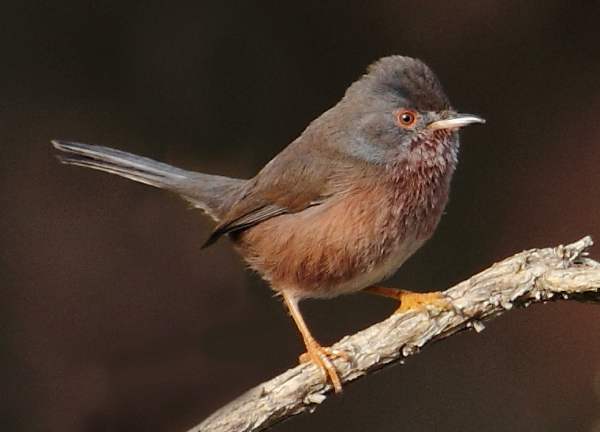
In the realm of the southern English heathlands, the Dartford Warbler (Sylvia undata) reigns as an enigmatic and resilient inhabitant. With its distinctive appearance and unique characteristics, this elusive bird thrives amidst the rugged beauty of its chosen habitat.
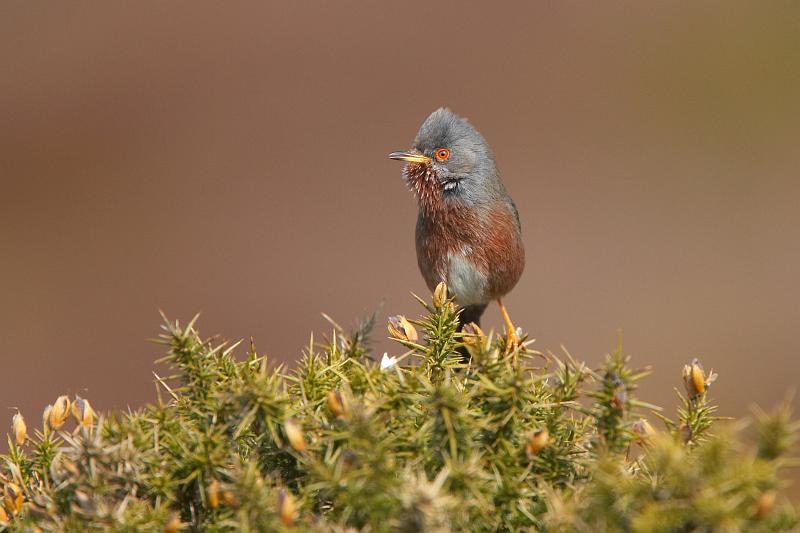
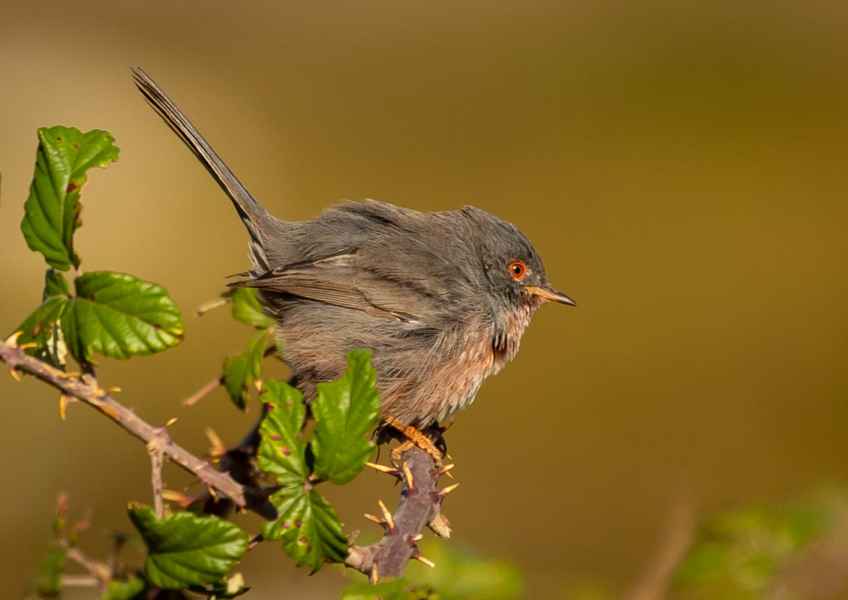
In contrast, the female Dartford Warbler is more subdued in coloration, lacking the vibrant red breast of the male. Overall, she exudes greyish hues that distinguish her from her male counterpart. Meanwhile, the juvenile shares the female’s color palette but with additional variations of grey.
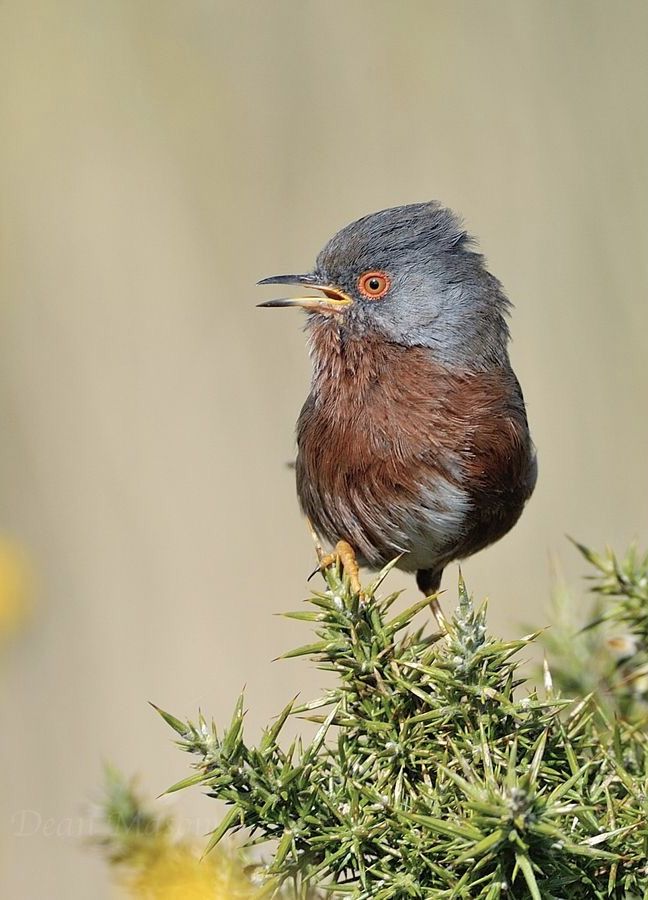
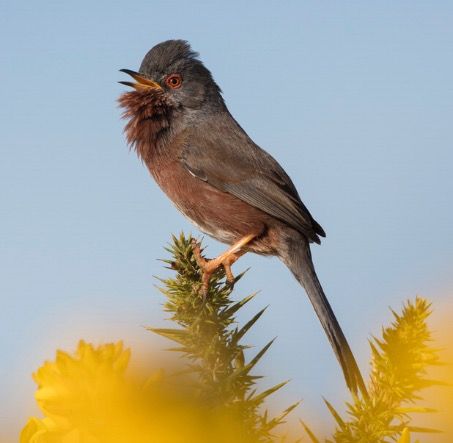
The Dartford Warbler’s melodious call is a rapid, low, almost scratchy warble interspersed with higher notes, creating a symphony that resonates in its heathland home.
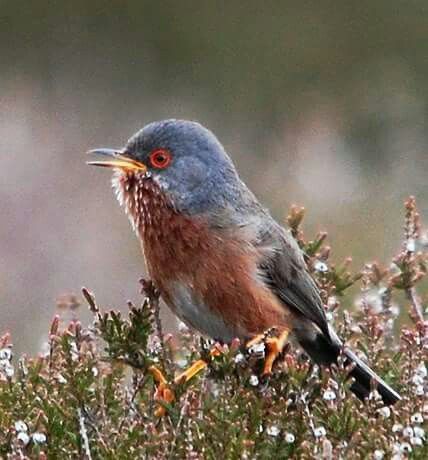
This hardy resident’s diet consists predominantly of insects and spiders, skillfully foraged from the low undergrowth. However, during winter, the Dartford Warbler also indulges in berries and seeds to sustain itself.

Found primarily in lowland areas of heather and gorse, particularly in the southern and southwestern regions of England, Dartford Warblers are known to be elusive due to their habitat choices. Their presence often goes unnoticed as they move stealthily through the heather or gorse. On warm summer days, you might catch a glimpse of them sunbathing on flowering gorse bushes or darting between bushes in swift flight. The male’s distinct shape and coloration aid in identification, although it’s important to avoid confusion with the rare vagrant Subalpine Warbler from continental Europe and Africa.
Dartford Warblers are monogamous and tend to mate for life. They construct cup-shaped nests, usually near the ground amidst heather or gorse on gently sloping coastal heathlands. During the breeding season between April and July, the female lays up to three broods, each comprising 3 to 5 eggs. The eggs are adorned in pale green or white hues, adorned with delicate brown speckles. After a two-week incubation period, the chicks emerge, and within another fourteen days, they fledge.
Like many of their avian counterparts, Dartford Warblers boast an average lifespan of up to five years. Their ability to adapt and thrive in the challenging heathland environment speaks to their resilience and serves as a testament to their remarkable place within the natural tapestry of the southern English countryside.
Video: