
The Magnificent Frigatebird (Fregata magnificens) is a remarkable seabird known for its impressive size, striking appearance, and unique behaviors. It is one of five species in the frigatebird family, and true to its name, it is indeed magnificent.
Physical Description
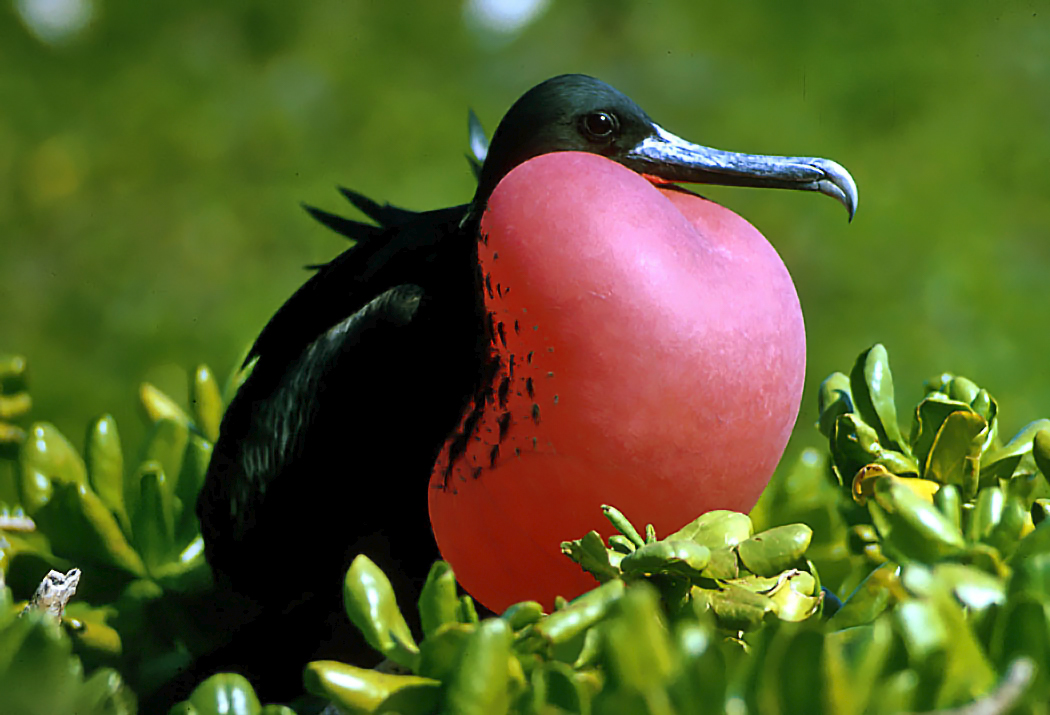
The Magnificent Frigatebird is a large bird, with a wingspan that can reach up to 2.3 meters (7.5 feet), making it one of the largest wingspans relative to body size among all birds. Males and females exhibit sexual dimorphism. Males are all black with a distinctive, inflatable red throat pouch, called a gular sac, which they use during courtship displays. Females are slightly larger than males and have a white breast and lower neck, along with a black head and upper body. Both sexes have long, forked tails and sharp, hooked bills.

Habitat and Distribution
These birds are typically found in tropical and subtropical oceans. Their range extends throughout the Pacific and Atlantic Oceans, from the coastlines of the Americas to the Caribbean and the Galápagos Islands. They prefer coastal areas, including islands and islets, where they can nest and roost in mangroves or low bushes.

Behavior and Diet
Magnificent Frigatebirds are known for their extraordinary flying abilities. They are capable of staying aloft for days or even weeks at a time, soaring on thermals and air currents with minimal effort. Unlike many seabirds, they do not have waterproof feathers, so they avoid diving into the water. Instead, they feed by snatching prey from the ocean surface or by engaging in kleptoparasitism—harassing other seabirds to force them to regurgitate their food.
Their diet primarily consists of fish and squid, but they also eat other marine animals such as jellyfish. They are opportunistic feeders and will take advantage of any available food source, including scraps from fishing boats.

Breeding and Lifespan
Breeding colonies of Magnificent Frigatebirds are typically found on remote islands. During the breeding season, males gather in leks and inflate their bright red gular sacs to attract females, performing elaborate displays that include drumming the sac with their bills and spreading their wings. Once a pair is formed, they build a nest together, usually in a tree or shrub.
The female lays a single egg, which both parents incubate for about 50 days. After hatching, the chick remains in the nest and is fed by both parents for several months. Young frigatebirds take a long time to become independent, often staying with their parents for up to a year. Magnificent Frigatebirds have a long lifespan, often living over 30 years.

Conservation Status
Currently, the Magnificent Frigatebird is listed as a species of Least Concern by the International Union for Conservation of Nature (IUCN). However, they face threats from habitat destruction, particularly the loss of nesting sites due to coastal development and human disturbance. Additionally, their reliance on stealing food makes them vulnerable to changes in fish populations and the health of marine ecosystems.

In conclusion, the Magnificent Frigatebird is an extraordinary bird, admired for its impressive flight capabilities and unique behaviors. Despite the challenges they face, these birds continue to be a prominent and fascinating part of the marine avian community.
Video: