A very distinctive bird that is mostly black and white, flashing beautiful shades of yellow when on the move!
Meet the New Holland Honey Eater
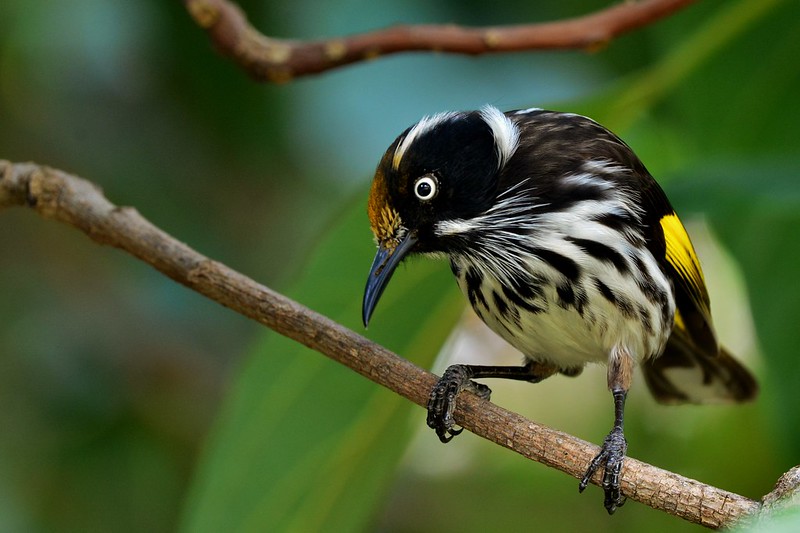
The New Holland honeyeater (Phylidonyris novaehollandiae), is a honeyeater species found throughout southern Australia. A mainly black and white bird, with a large yellow wing patch, white facial tufts, and a matching white iris. There is also a small white ear patch and yellow margins in the tail.

A highly active bird, the New Holland Honeyeater rarely sits still long enough for photo ops. The female is similar looking to the male, though slightly smaller.
Juveniles are browner and have grey eyes instead of white.
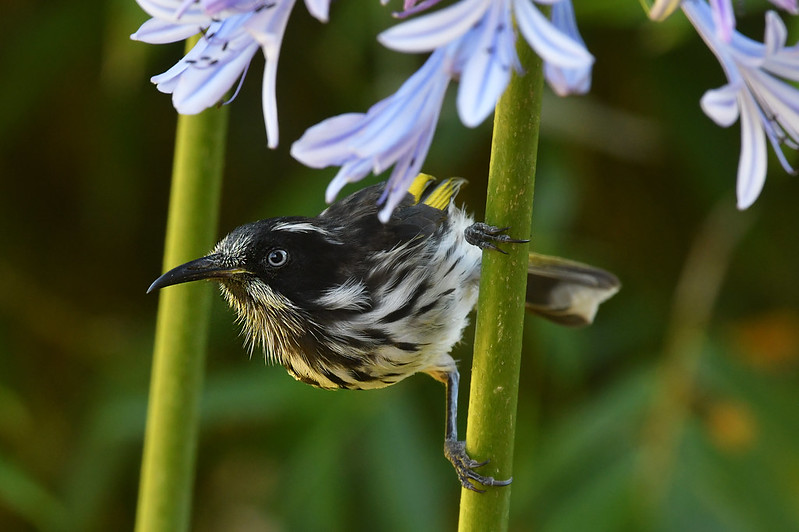
This species is found throughout southern Australia, including the island of Tasmania, Brisbane, and Queensland, to just north of Perth in Western Australia.
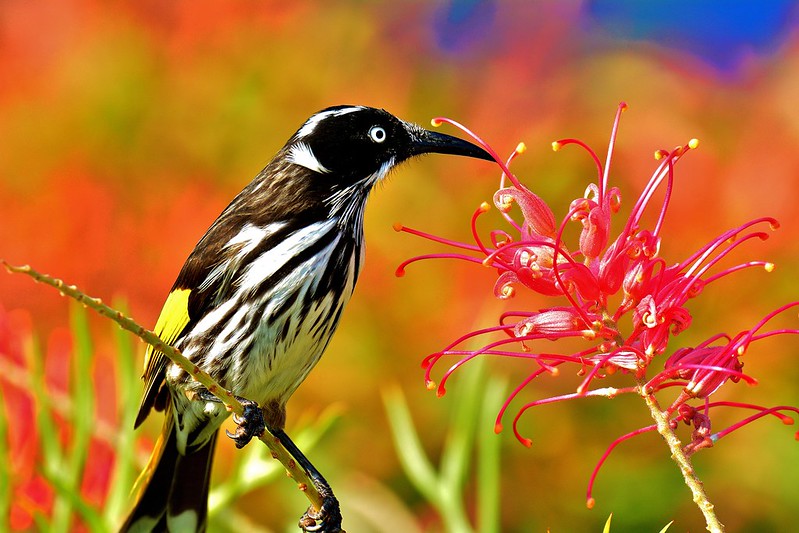
These birds are mostly found in dry scrubby areas, but they will also frequent dry savannas, forests, grasslands, plantations, and gardens, especially where Grevillea and Banksia are found.
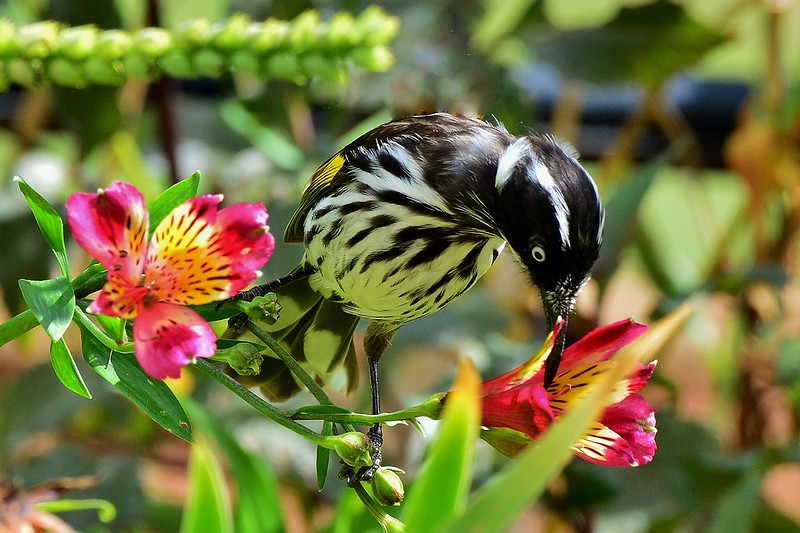
New Holland Honeyeaters actively feed on the nectar of flowers, darting from flower to flower in search of this high-energy food. Other sources of food include fruit, insects, and spiders.

The New Holland Honeyeater builds a cup-shaped nest about 6 m off the ground. It is made mostly out of bark and grasses glued together with spider web. The interior is lined with soft material into which one to three pinkish eggs are laid. Incubation takes around 14 days after which both sexes feed the chicks. A breeding pair can raise up to two to three broods a year.
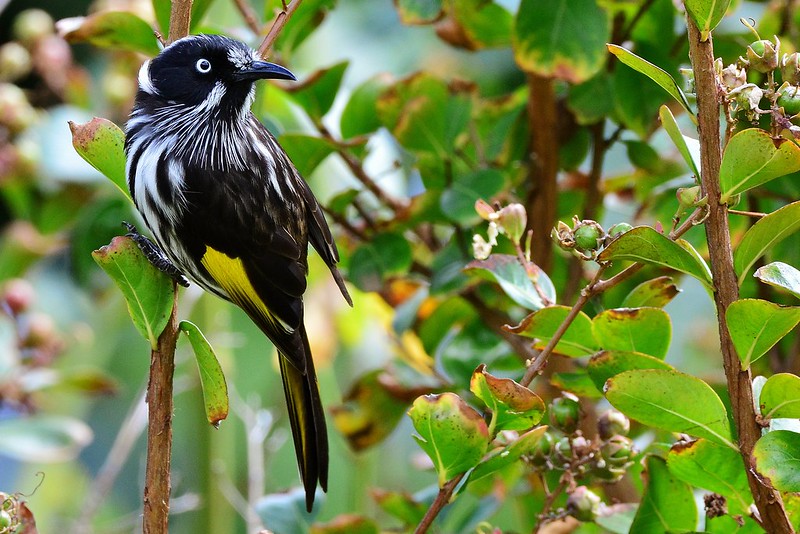
The New Holland honeyeater is described as common with areas where it is provided a similar habitat. The population is thought to in a stable state with no evidence of decline or substantial threats.
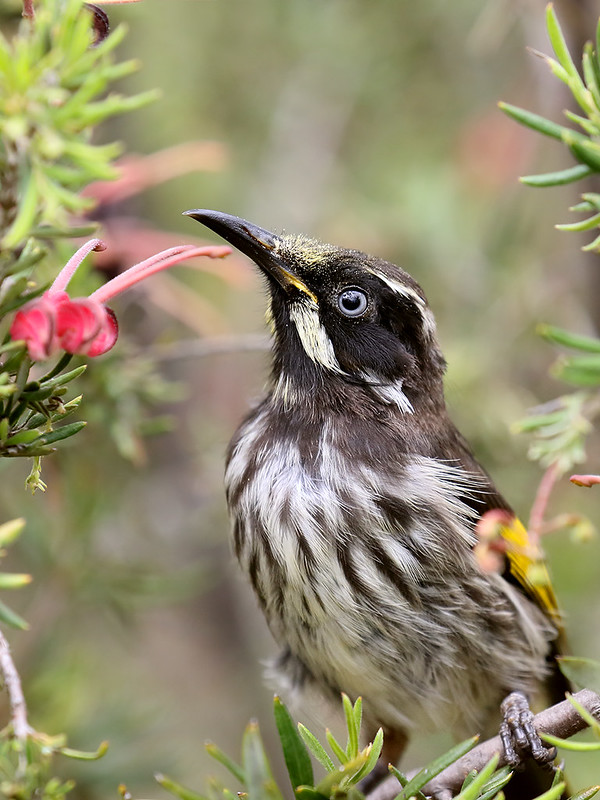
Watch and listen to this bird right here below: